
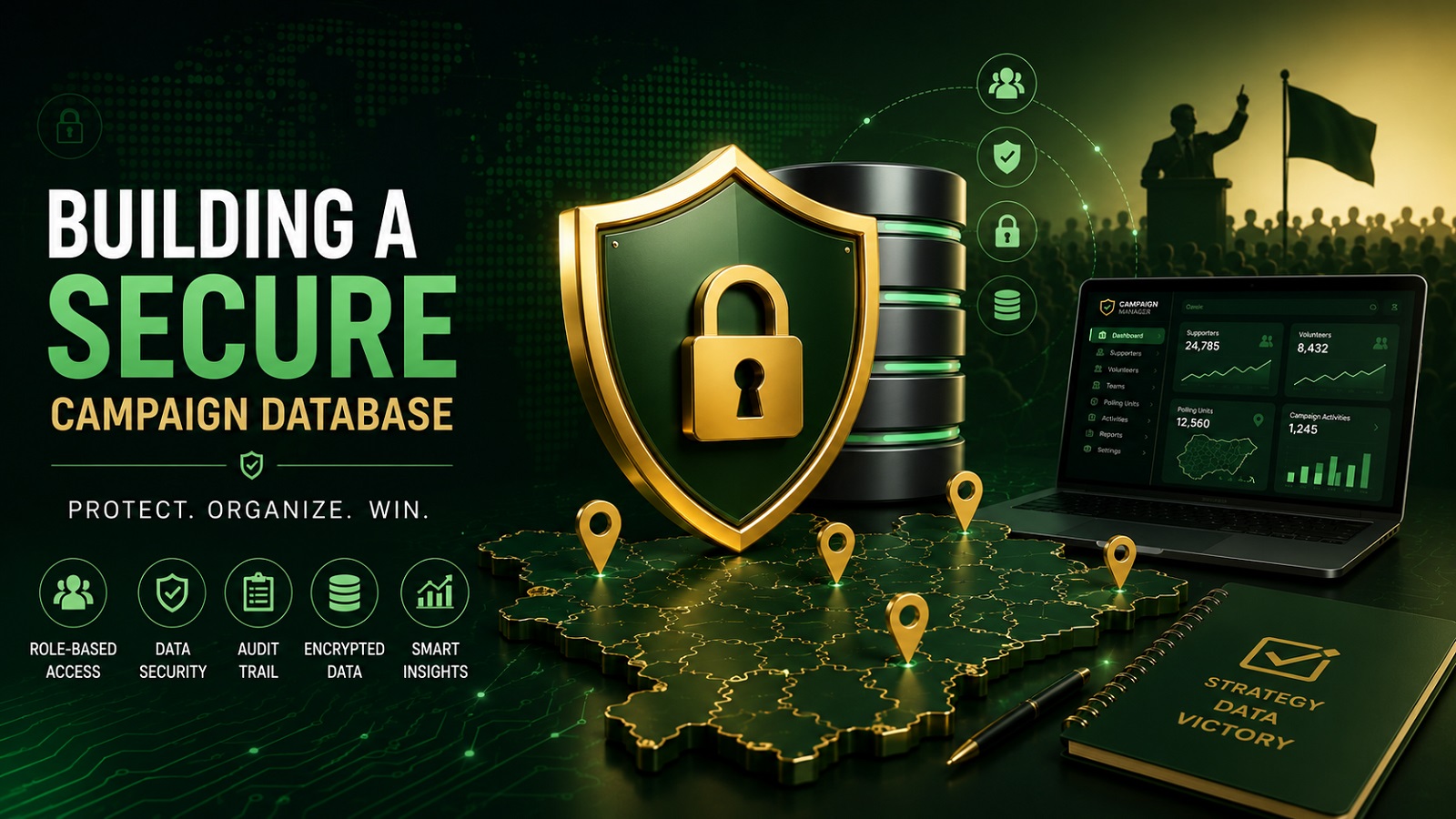
In today's political landscape, data has become one of the most valuable assets a campaign can possess. From volunteers and supporters to polling unit coordinators and campaign activities, every successful campaign relies on accurate, organized, and secure information.
Unfortunately, many campaigns still manage critical data using spreadsheets shared over messaging apps, personal email accounts, or unsecured cloud drives. While these methods may seem convenient, they expose campaigns to unnecessary risks such as data leaks, accidental deletion, unauthorized access, and poor coordination.
A secure campaign database is no longer a luxury—it is a necessity.
Why Security Matters
Campaign databases often contain sensitive information, including:
- Supporter contact information
- Volunteer records
- Polling unit assignments
- Campaign team structures
- Event attendance
- Communication history
- Survey and feedback data
If this information falls into the wrong hands, the consequences can range from operational disruption to reputational damage and loss of public trust.
Building security into your campaign from the beginning protects both your organization and the people who trust you with their information.
Key Principles of a Secure Campaign Database
1. Control Who Has Access
Not everyone should have access to everything.
A national campaign director requires a different level of access than a ward coordinator or volunteer. Access should be based on responsibilities, ensuring that users only see the information necessary for their role.
2. Organize Data by Geographic Structure
Political campaigns naturally operate through a hierarchy—country, region, state, district, local government, ward, and polling unit.
A well-designed database reflects this structure, making it easier to coordinate activities while preventing unnecessary access across different locations.
3. Keep an Audit Trail
Every important action should be recorded.
Knowing who created, modified, exported, or deleted records improves accountability and helps identify mistakes or suspicious activity before they become major problems.
4. Protect Sensitive Information
Campaign data should be protected using modern security practices such as encrypted connections, secure authentication, strong passwords, and regular backups.
Good security is not only about preventing hackers—it also protects against accidental loss and internal mistakes.
5. Prepare for Growth
A campaign that begins with a few hundred supporters can quickly grow into tens of thousands.
Your database should be designed to scale without becoming difficult to manage. Choosing the right technology early helps avoid costly migrations later.
Avoid Common Mistakes
Many campaigns unintentionally create security risks by:
- Sharing spreadsheets through messaging apps
- Allowing multiple versions of the same data
- Using shared passwords
- Giving every user administrative access
- Keeping no record of data changes
- Storing campaign information on personal devices without protection
These practices may save time initially, but they often create larger problems as campaigns expand.
Technology Should Support Strategy
A campaign database should do more than store information. It should help campaign leaders make informed decisions, coordinate teams efficiently, and monitor activities across every level of the organization.
When data is accurate, structured, and secure, campaign teams spend less time searching for information and more time engaging with supporters and executing their strategy.
How Campaign Manager Helps
Campaign Manager was built with these principles in mind.
The platform is designed to organize campaign operations through structured geographic hierarchies, role-based access control, comprehensive activity tracking, and secure data management. Whether you're coordinating a local election or managing a nationwide campaign, the goal is simple: provide campaign teams with the tools they need while helping protect the information entrusted to them.
Technology cannot win an election on its own—but secure, organized, and reliable information gives every campaign a stronger foundation for making informed decisions and coordinating effectively.
Final Thought
Every campaign invests in rallies, publicity, and outreach. Investing in secure data management should receive the same level of attention.
Because in modern politics, protecting your campaign data is just as important as collecting it.